The urge to buy containers usually arrives after a cupboard avalanche: a packet of rice slips behind the tins, or the lunch containers lose their lids again. But an organizer only helps if it fits the cupboard and the way you reach for things. Start with the task that feels frustrating, then look for the smallest change that solves it.
Measure Before You Choose
Measure the shelf’s usable width, depth, and height, including the space lost to hinges or pipes. For a pull-out drawer, check the opening as well as the interior dimensions; an organizer that fits inside may still catch on the cabinet frame. A quick note or phone photo of the measurements can prevent an attractive but impractical purchase.
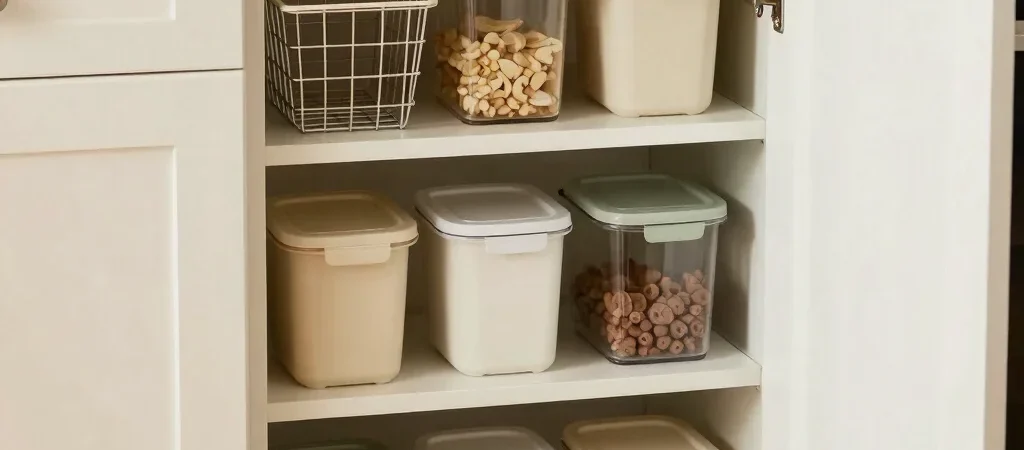
Think about access, not just capacity. Open bins can make packets easy to see, while a turntable may help with small jars in a deep corner cabinet. Neither is automatically better: a bin that is too deep can hide items, and a rotating tray needs enough clearance to turn without knocking into other objects.
Match The Material To The Job
Clear containers make contents visible, but they need to be easy to clean and sized for what you buy. Wire baskets can suit produce or packaged goods where airflow and visibility matter, while a drawer divider can keep utensils from shifting without claiming extra counter space. For food-contact use, check the product’s care instructions and intended use rather than assuming every storage container belongs in the pantry.
Consider how often an organizer needs to be moved, washed, or refilled. A heavy container may be awkward on a high shelf, and a complex system can add work to a quick weeknight meal. The most useful choice is usually the one that makes putting things away as straightforward as taking them out.
Keep Recommendations Transparent
When comparing home products, look for clear dimensions, material details, care guidance, and information about how an item is intended to be used. We do not treat a polished product image as proof that something will suit every kitchen. Our recommendations focus on the trade-offs a reader can assess for their own space.
Some links in our articles may be affiliate links, which means Trend & Decor may earn a commission if you make a purchase through them. That relationship does not replace explaining what a product is, what to check before choosing it, and where its limitations may matter. Measure first, and only add an organizer if it makes a real kitchen task easier.